Artifacts Timeline
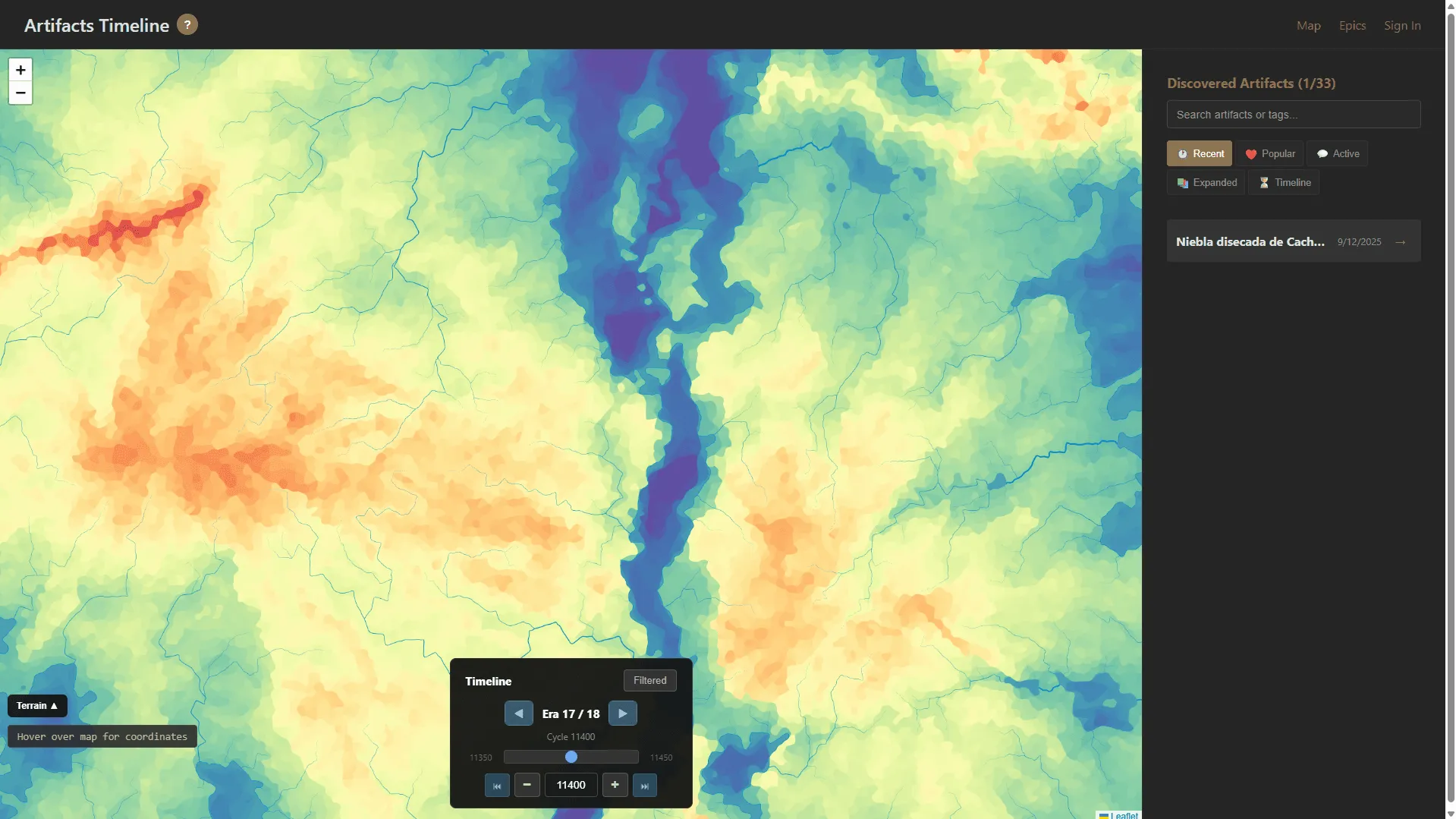
A collaborative worldbuilding web experiment where strangers create fictional archaeological artifacts on a shared map to build emergent narratives about non-existent civilizations.
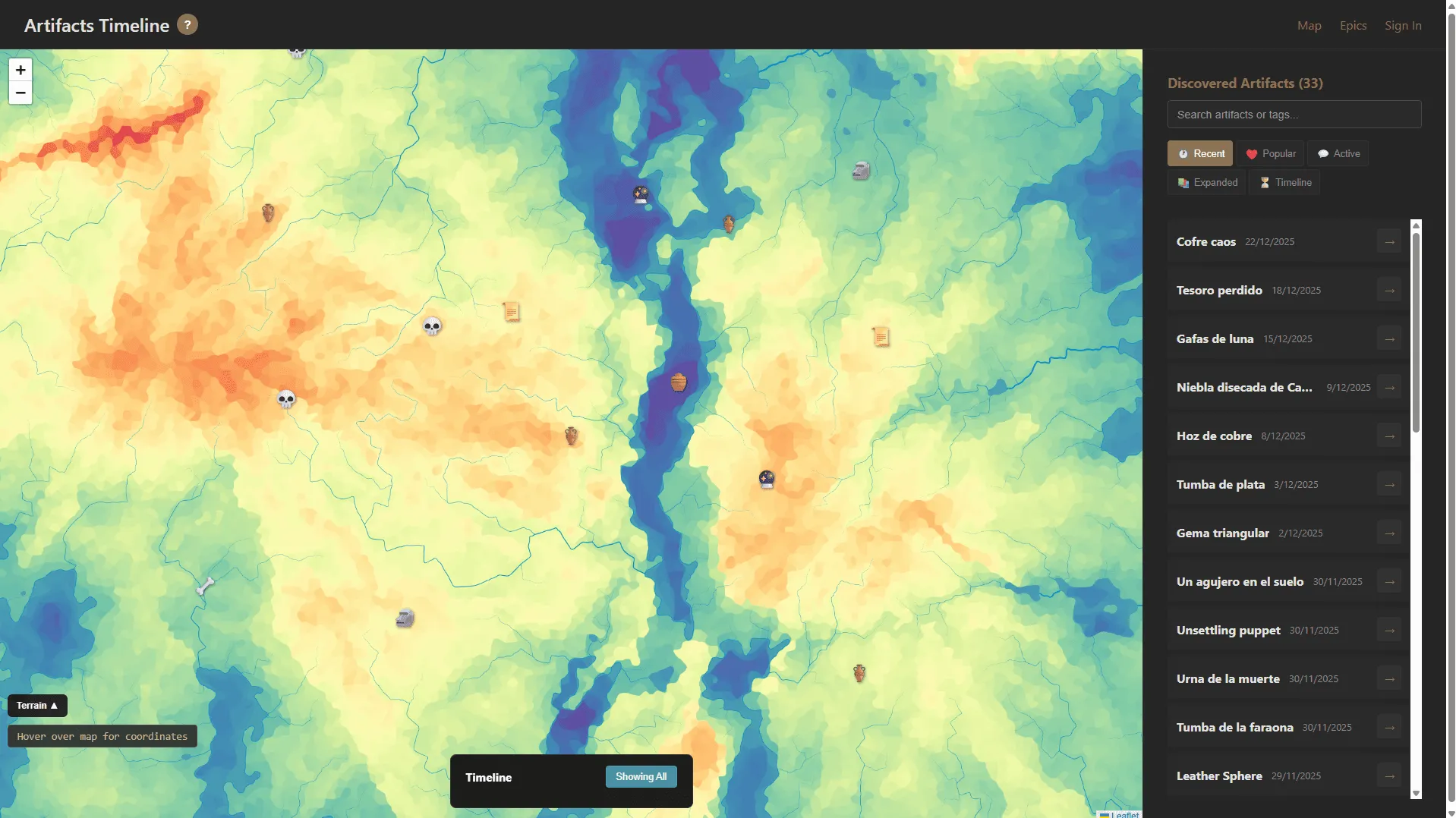
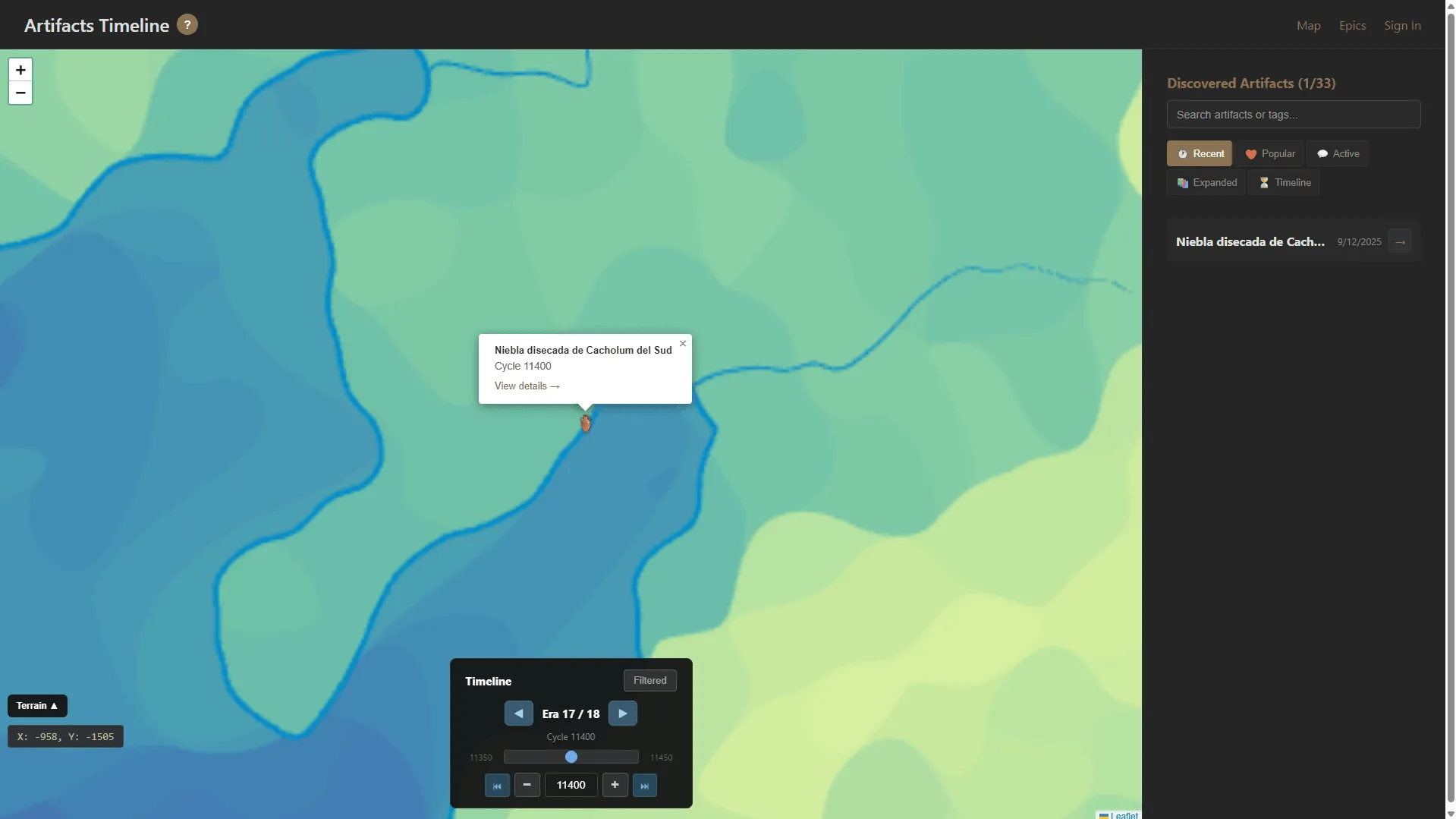
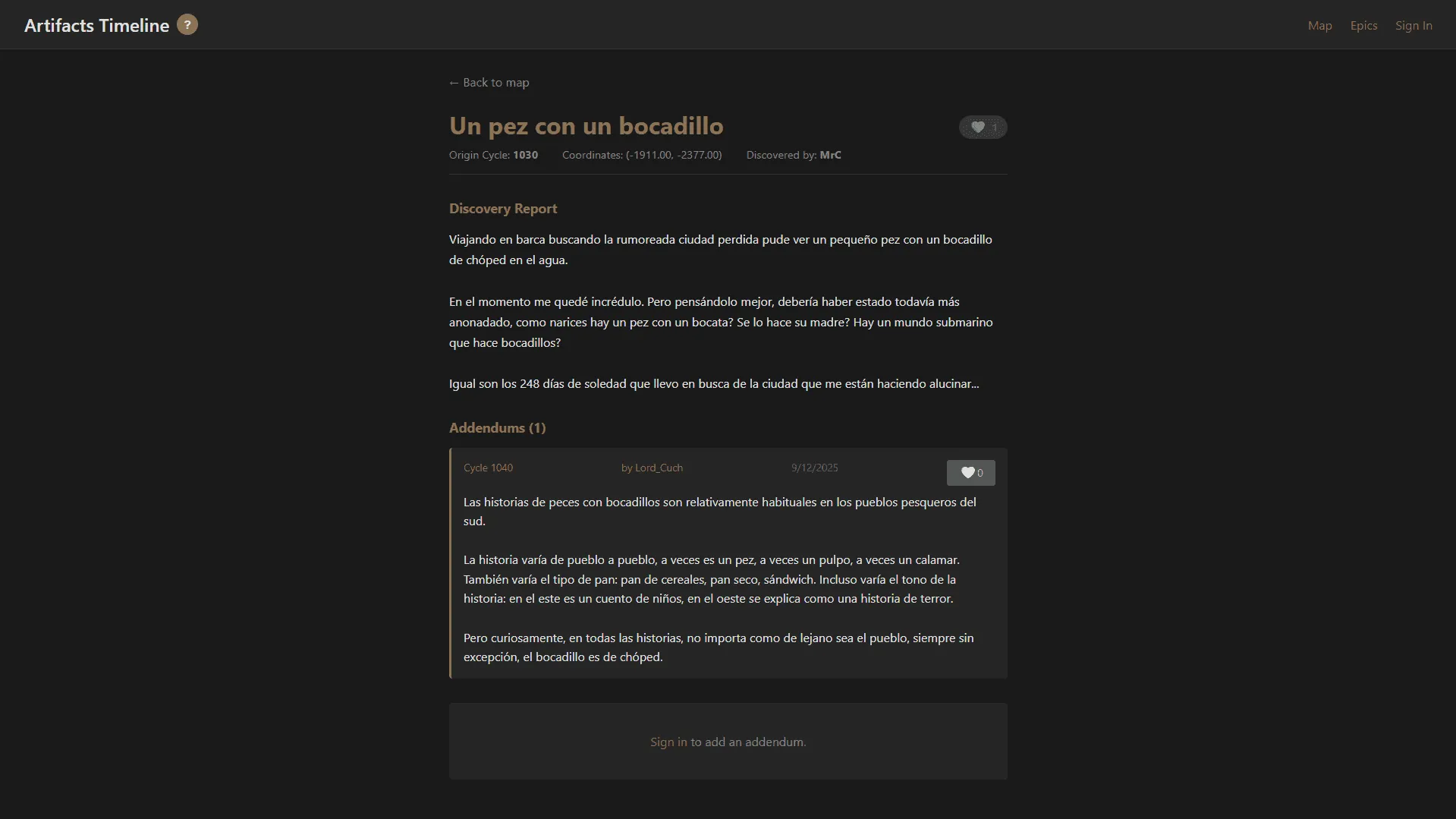
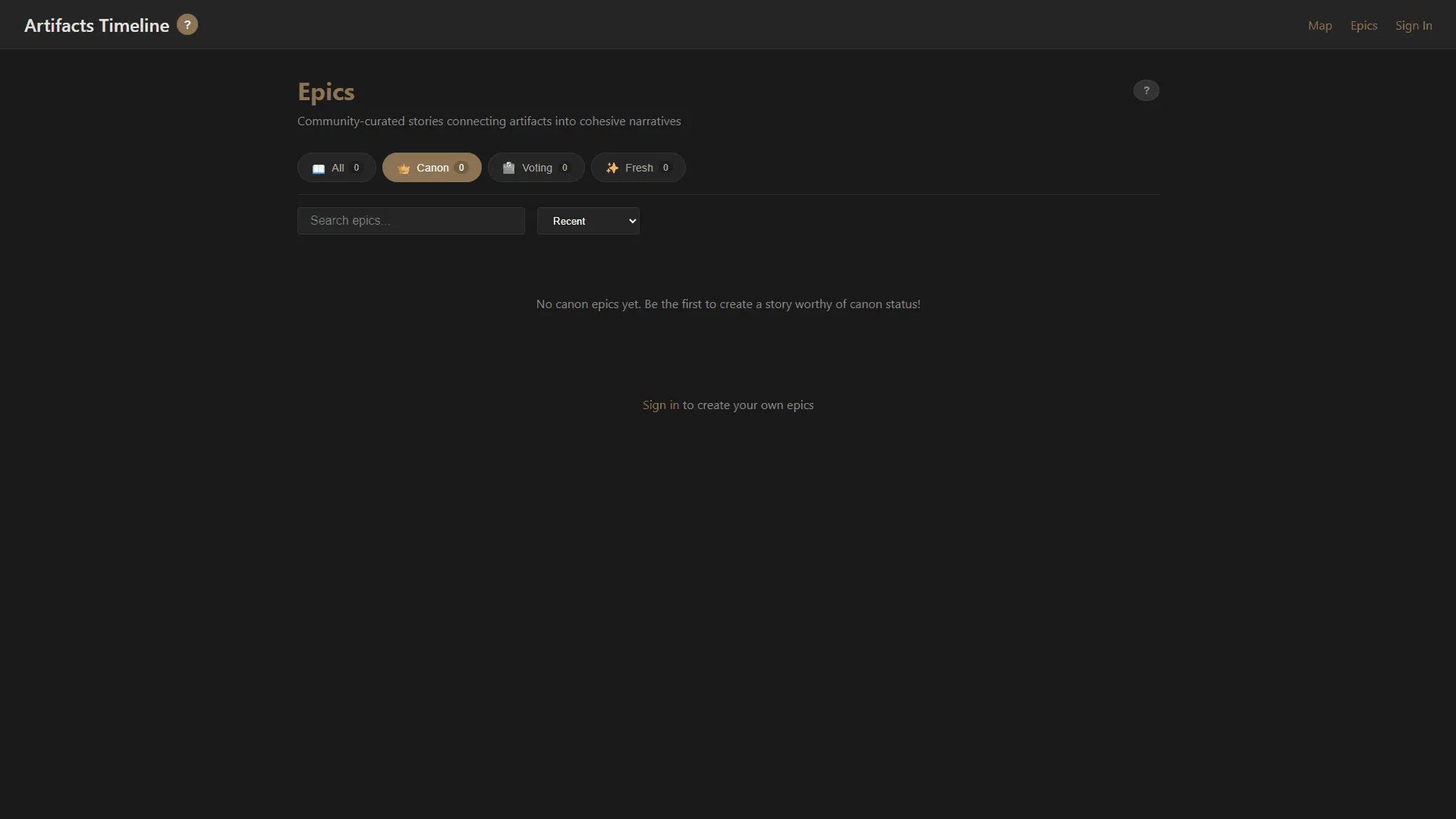
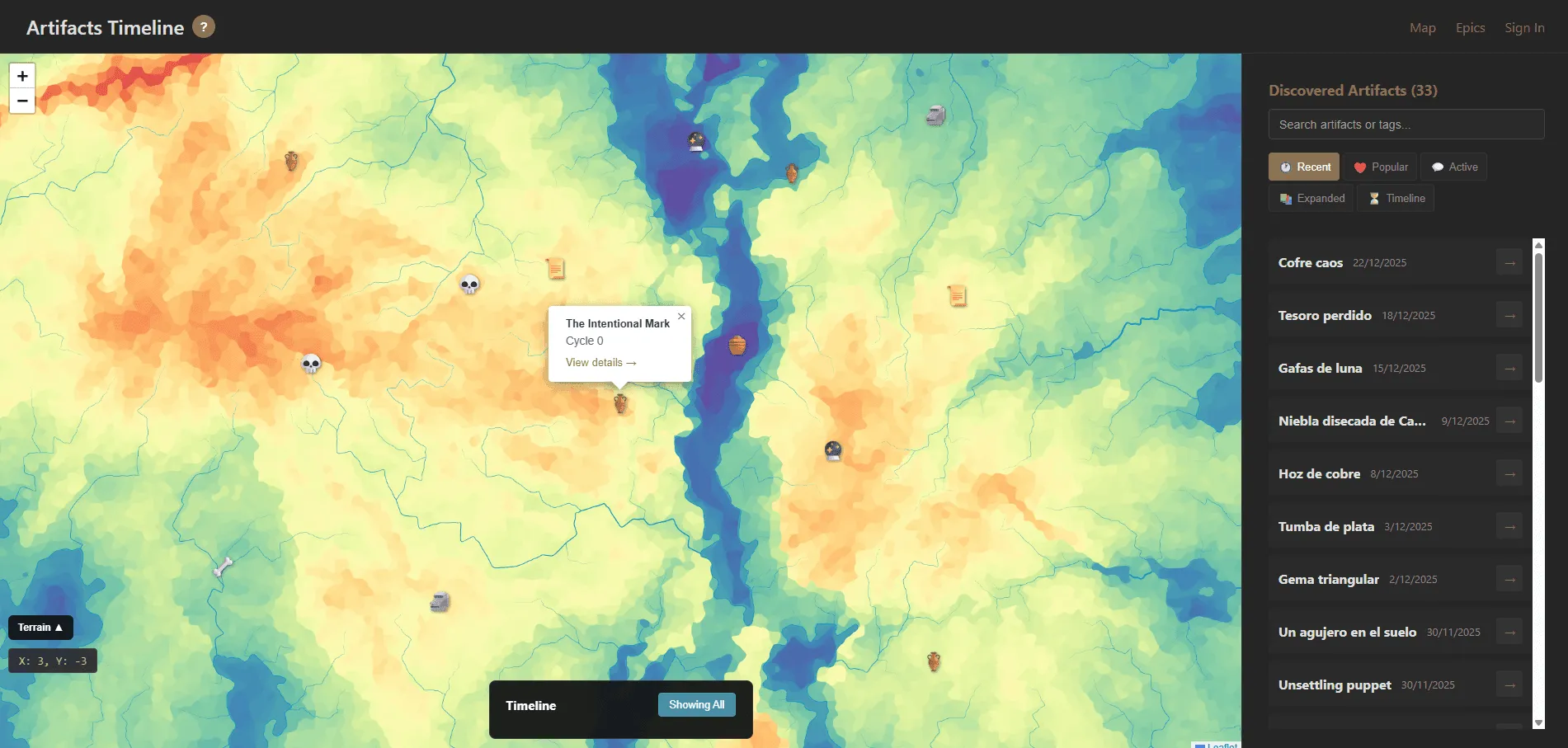
Artifacts Timeline is a collaborative worldbuilding experiment built as my first full-stack web application, transitioning from Unity/C# to React/Node.js. Players discover and document fictional archaeological artifacts on a shared interactive map, contributing to an emergent narrative about civilizations that never existed. Inspired by Blaseball's chaotic community storytelling and SCP Foundation's documentation style, the project features a 3-point daily excavation economy that balances creation vs collaboration, temporal discovery mechanics where artifacts appear and fade across a timeline, and an addendum system that encourages building on others' stories. The technical stack includes React frontend, Node.js/Express backend, PostgreSQL via Supabase, and Leaflet.js for the interactive map. Key features include custom timeline clustering for era navigation, temporal artifact visibility systems, mobile-responsive design, and Row Level Security for data protection.
Overview
A collaborative worldbuilding experiment where strangers create fictional archaeological artifacts on a shared map, building emergent narratives about civilizations that never existed. My first full-stack web project, transitioning from Unity/C# to React/Node.js in 30 days.
Challenge
Create a compelling collaborative storytelling platform that balances content creation with community interaction, implements meaningful resource constraints without frustrating players, and handles temporal mechanics for artifact discovery - all while learning web development from scratch.
Discovery
Researched emergent narrative games like Blaseball and community-driven wikis like SCP Foundation. Analyzed MMO economy systems and roguelike progression loops to understand what creates sustainable engagement. Identified that the core tension should be between individual creation and collaborative expansion.
Solution
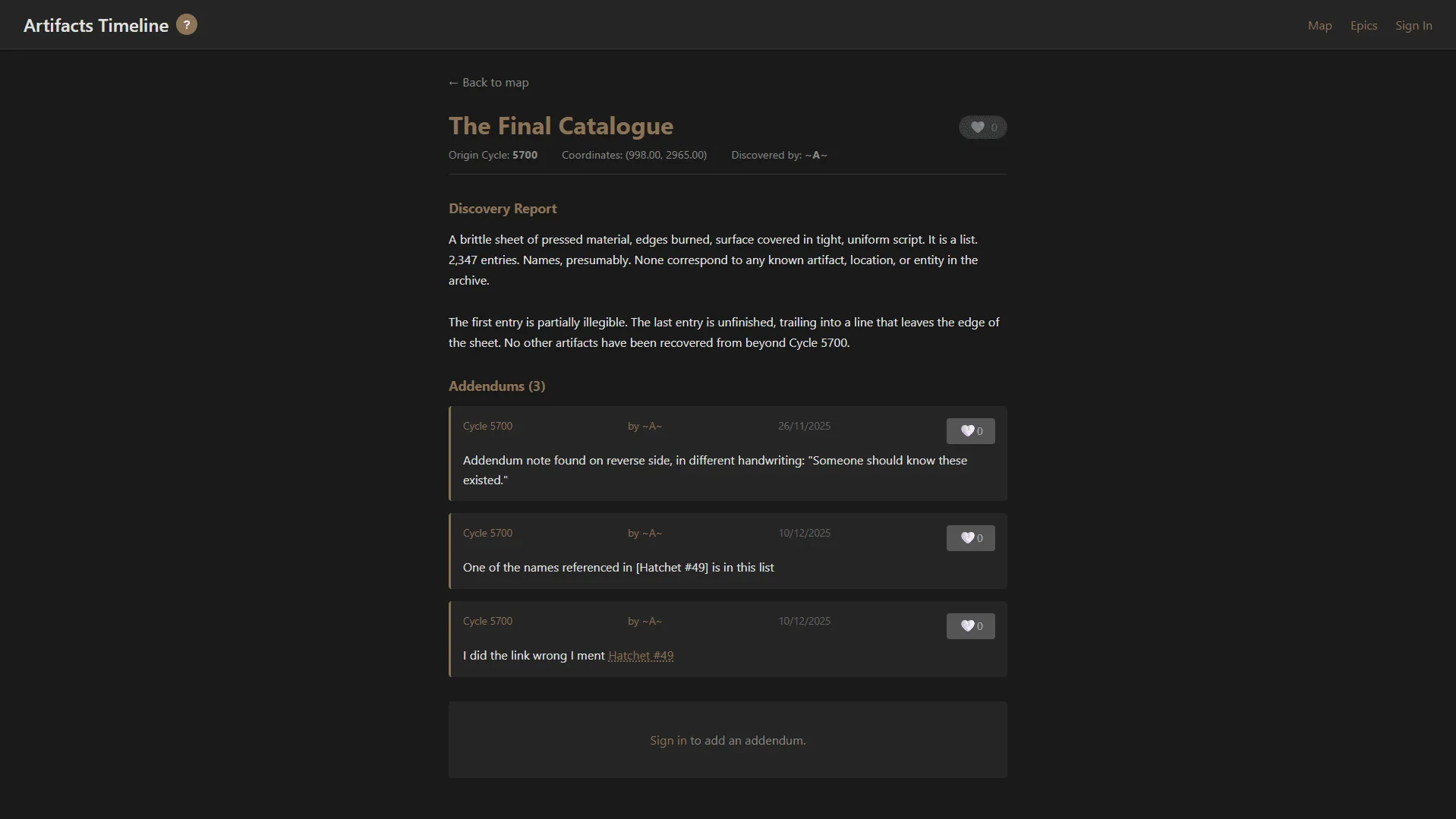
Designed a 3-point daily excavation economy where creating artifacts costs 2 points and adding addendums costs 1, naturally incentivizing collaboration. Implemented temporal mechanics where artifacts appear and fade across a navigable timeline, creating discovery moments. Built an interactive map with Leaflet.js for spatial exploration.
Implementation
Built with React frontend, Node.js/Express backend, and PostgreSQL via Supabase. Implemented custom timeline clustering algorithm for era navigation, Row Level Security for data protection, and mobile-first responsive design. Deployed to Vercel with UTC-synchronized daily point resets.
Results
Successfully delivered a production-ready MVP in 30 days while learning an entirely new tech stack. The project demonstrated functional game systems design but revealed critical insights about user motivation vs mechanical complexity - elegant systems mean nothing without a compelling core hook.
Challenges
- •Designing a resource economy that encourages both content creation and collaborative expansion without overwhelming players
- •Creating temporal discovery mechanics where artifacts naturally appear and fade across a navigable timeline
- •Building a full-stack web application from scratch as a Unity developer with no prior web development experience
Solutions
- •Implemented a 3-point daily excavation system: artifact creation costs 2 points while adding addendums costs 1, incentivizing collaboration
- •Developed custom timeline clustering algorithm that automatically generates 'eras' from player content with 500-cycle artifact lifespans
- •Learned React, Node.js, Express, PostgreSQL, and Supabase in 30 days to deliver a production-ready MVP with mobile-responsive design